Whether you’re a backyard cricketer, a couch commentator, or a die-hard fan glued to every match, there’s one thing that separates the casual viewers from the true aficionados—understanding cricket fielding positions.
Cricket isn’t just about scoring runs or taking wickets. Strategy plays a massive role, and field placement is one of the most intricate elements. If you’ve ever found yourself confused by terms like silly mid-off, deep square leg, or third man, this guide is made just for you.
🎯 Visual Guide to Cricket Fielding Positions
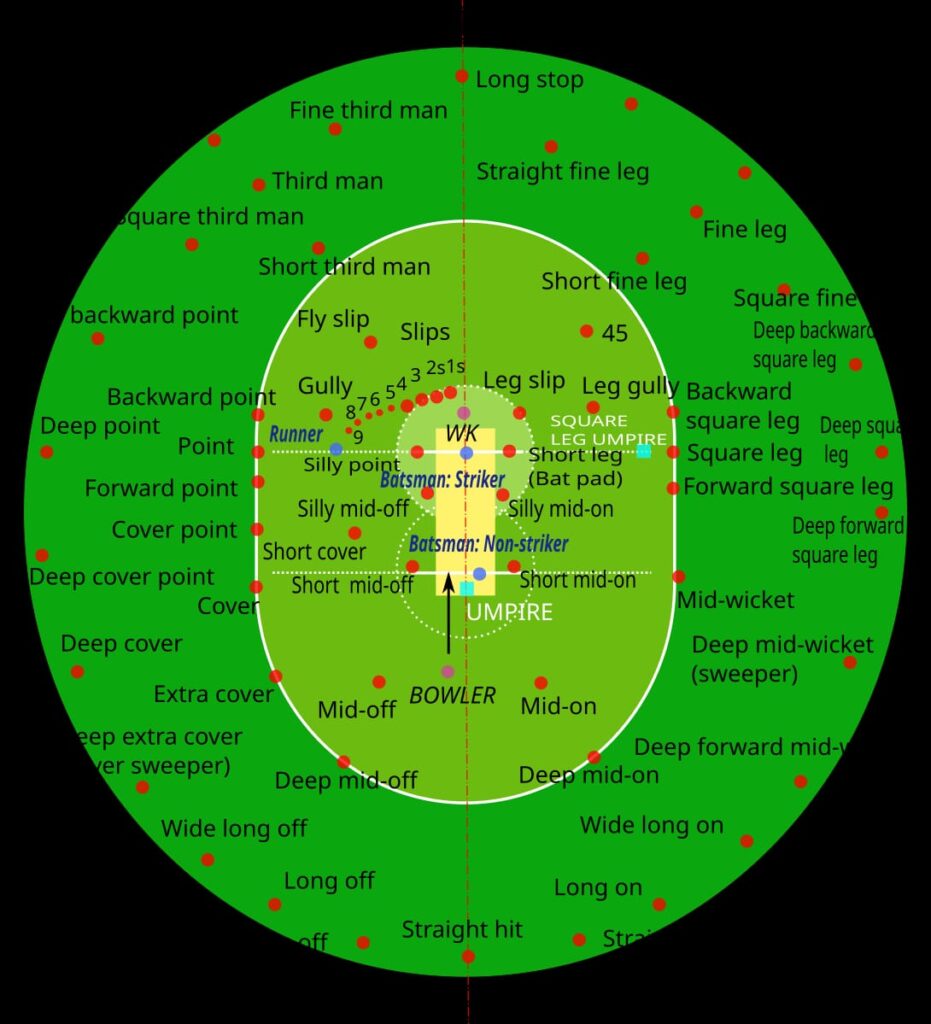
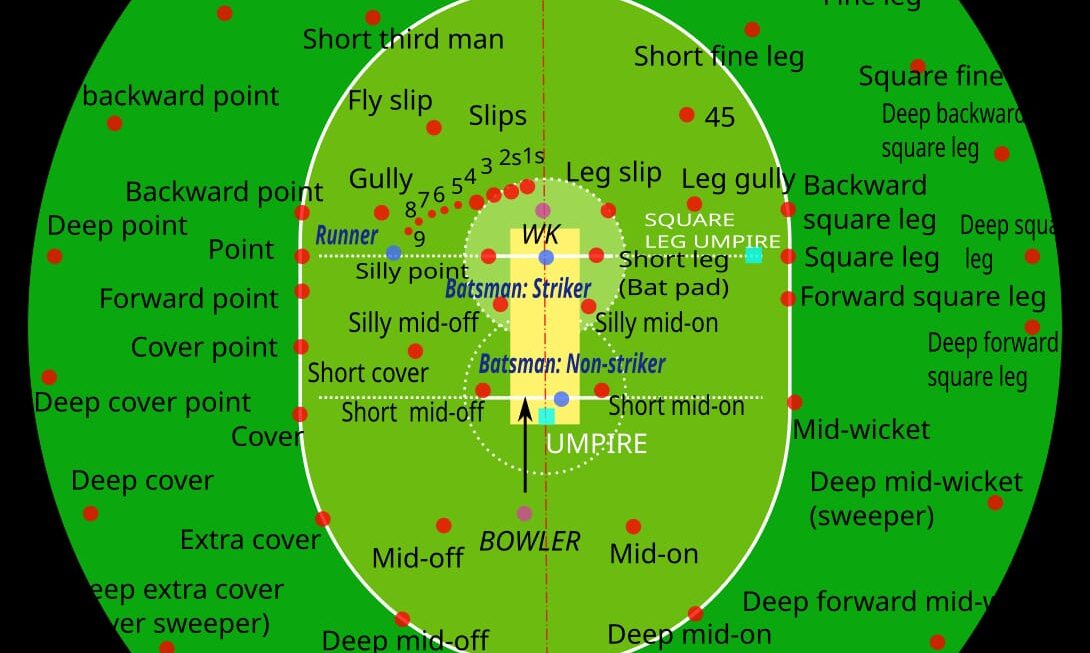
This visual splits the ground into a 360-degree layout with key positions clearly marked—so you can finally decode field setups you see in professional matches.
🧠 The Basics: How the Field is Divided
The cricket field is typically divided into two main sides:
- 🟢 Off Side: The side facing the batsman’s front (for a right-hander, the left side).
- 🔴 Leg Side (or On Side): The side behind the batsman’s legs.
Then it’s further split into:
- 🎯 Inner Circle: Where close-in fielders stand (high-pressure zones).
- 🌐 Outer Circle: Near the boundary to prevent big hits.
⚡ Close-In Fielders (Think Pressure & Reflexes)
These fielders stand dangerously close to the batter, ideal for Test cricket:
- Silly Point, Silly Mid-off, Silly Mid-on – almost breathing down the batsman’s neck.
- Short Leg, Leg Gully – close leg side positions for catching quick edges.
- Slip, Gully, Fly Slip – behind the batter, awaiting nicks from the edge.
📌 Learn more about Cricket News & Player Performances.
🎯 Infield Positions (Control the Singles)
Placed within the 30-yard circle, these fielders help restrict quick singles:
- Point, Cover, Mid-off, Mid-on, Mid-wicket
- Backward Point, Square Leg, Short Cover
They are positioned to cut off drives, sweeps, and deflects into space.
📌 Get smarter at predicting fantasy points with our Fantasy 11 Guide.
🛑 Outfield Positions (Stop the Boundaries)
Placed near the ropes to prevent fours and sixes:
- Deep Cover, Deep Point, Long Off, Long On, Deep Mid-Wicket
- Third Man, Fine Leg, Deep Square Leg
These players have strong arms to throw from the boundary and cover large ground.
📌 For every match’s best insights, check our Toss Predictions and get an edge early.
🧩 Unique & Tactical Spots in Modern Cricket
Modern-day cricket is tactical and dynamic, with captains adjusting fielding to suit every ball:
- 45: A fine version of square leg.
- Sweeper Cover: Hangs deep on the off side to collect hard hits.
- Fly Slip: A creative spot between slip and third man.
📌 See how this influences game outcomes with our Latest Match Predictions.
✅ Conclusion: Spot the Field & Read the Game
Fielding positions aren’t just labels—they’re tools of strategy. A well-set field reflects:
- The bowler’s plan
- The batsman’s weakness
- The captain’s mindset
⚡ So the next time you watch a game, challenge yourself to identify the field placements in real-time. Impress your friends with your knowledge—and remember…
Don’t call yourself a true cricket fan if you don’t know these positions! 😉